March 16, 2026: New Delhi, India – India marked National Vaccination Day on March 16, 2026, commemorating the launch of the Pulse Polio Immunisation Programme, one of the most significant public health initiatives in the country’s history. The day serves as a reminder of India’s sustained efforts in eradicating vaccine-preventable diseases and strengthening immunisation coverage across diverse populations.
Historical Background of National Vaccination Day
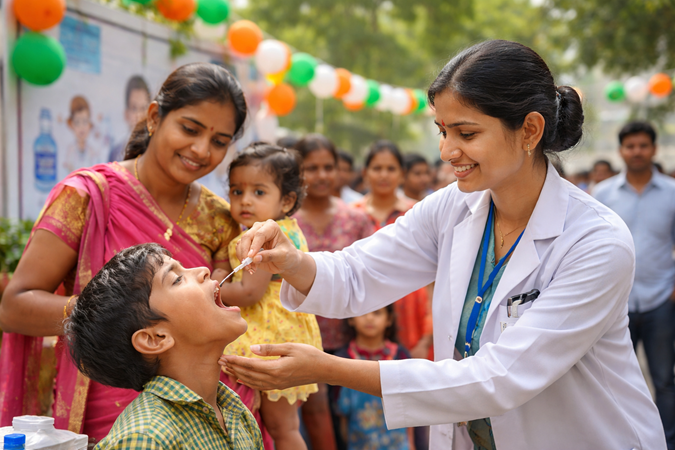
National Vaccination Day is observed annually to mark the administration of the first dose of the oral polio vaccine in India in 1995 under the Pulse Polio Immunisation Programme. The initiative was launched as part of a nationwide campaign aimed at eradicating poliomyelitis, a highly infectious viral disease that primarily affects children under the age of five.
India was officially declared polio-free by the World Health Organization in 2014, following years of sustained immunisation drives, surveillance, and community engagement. The success of the programme has been widely recognized as a major public health achievement, demonstrating the effectiveness of coordinated efforts between government agencies, healthcare workers, and international partners.
Current Immunisation Landscape in India
India’s immunisation programme has expanded significantly over the years, covering a wide range of vaccine-preventable diseases such as measles, rubella, diphtheria, tetanus, hepatitis B, and tuberculosis. The Universal Immunisation Programme (UIP), one of the largest in the world, targets millions of infants and pregnant women annually.
According to government data, the programme reaches approximately 27 million newborns and 29 million pregnant women each year. The introduction of newer vaccines and digital tracking systems has further strengthened the delivery and monitoring of immunisation services.
Officials noted that technological advancements, including electronic vaccine intelligence networks and real-time data systems, have improved supply chain management and reduced vaccine wastage.
Government Initiatives and Campaigns
On the occasion of National Vaccination Day 2026, health authorities reiterated the importance of initiatives such as Mission Indradhanush, which aims to increase full immunisation coverage among children and pregnant women. Intensified campaigns have been conducted in districts with low immunisation rates to ensure no child is left behind.
“Vaccination remains one of the most cost-effective public health interventions,” a senior official from the Ministry of Health and Family Welfare stated. “Our focus is on ensuring equitable access, especially in remote and underserved areas.”
The government has also emphasized the role of frontline health workers, including ASHA and Anganwadi workers, who play a critical role in mobilizing communities and delivering vaccines at the grassroots level.
Challenges and Ongoing Efforts
Despite significant progress, challenges remain in achieving universal immunisation coverage. These include logistical barriers in remote regions, vaccine hesitancy in certain communities, and the need for continuous public awareness campaigns.
Health experts have stressed the importance of addressing misinformation and strengthening community trust in vaccines. Efforts are ongoing to enhance communication strategies and engage local leaders to promote vaccine acceptance.
Additionally, the COVID-19 pandemic underscored the importance of robust immunisation systems and highlighted the need for preparedness in responding to emerging health threats.
Role of Healthcare Workers
Healthcare workers have been central to the success of India’s immunisation programmes. From conducting door-to-door campaigns during the Pulse Polio drives to administering vaccines in rural and urban settings, their contributions have been widely acknowledged.
“The dedication of our healthcare workers has been instrumental in achieving milestones in immunisation,” a public health expert noted. “Their efforts ensure that vaccines reach even the most remote corners of the country.”
Global Recognition and Impact
India’s success in eliminating polio has been recognized globally, serving as a model for other countries striving to eradicate the disease. The country continues to collaborate with international organizations to strengthen global immunisation efforts.
Experts have highlighted that sustained vigilance is necessary to prevent the re-emergence of vaccine-preventable diseases. Continuous surveillance and routine immunisation remain key components of India’s public health strategy.
Future Outlook
Looking ahead, India aims to further expand its immunisation coverage through the integration of advanced technologies, improved healthcare infrastructure, and targeted awareness campaigns. The focus remains on achieving complete immunisation coverage and addressing emerging health challenges.
National Vaccination Day continues to serve as a platform to reinforce the importance of vaccines and the collective responsibility of ensuring public health. As India moves forward, the lessons learned from past successes are expected to guide future initiatives in safeguarding the health of its population.