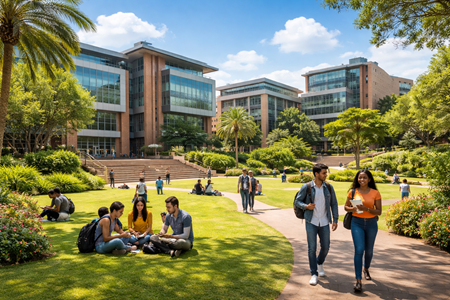

The university will be named after Guru Tegh Bahadur, the ninth Sikh Guru, who is revered as a symbol of sacrifice, courage, and the defence of human rights. Naming a technical institution after him carries weight in Punjab, where his legacy is deeply tied to the state’s cultural and religious identity.
What the bill actually sets up
The legislation creates the legal framework for establishing the Sri Guru Tegh Bahadur World-Class University as a state university with a specific mandate for advanced technical and professional education. It will function independently of the existing state university system, with its own governance structure, academic board, and funding mechanism.
The “world-class” designation in the name is not just branding. The bill sets out that the university will operate under standards benchmarked against leading global technical institutions. That means research output, faculty qualifications, infrastructure, and industry linkages are all expected to meet higher thresholds than what Punjab’s existing technical colleges currently deliver. Whether the institution actually gets there will depend on implementation — but the legislative intent is clear.
Why Punjab needs this
Punjab has a brain drain problem. Students from the state who want serious technical education largely leave, for IITs, NITs, or increasingly, for universities abroad. A significant portion of them do not come back. The state loses both the talent and the economic value that talent would have generated locally.
Punjab’s existing higher education infrastructure has not been equipped to stop that. The state has engineering colleges and polytechnics, but none of them have the research depth, faculty quality, or industry connections to compete with institutions in Bengaluru, Hyderabad, or Chennai. The new university is meant to change that calculation at least partially, give students a reason to stay, and give industries a reason to hire locally.
There is also a political dimension here that is worth acknowledging. Punjab has seen significant outmigration not just of students but of working-age adults seeking better opportunities elsewhere. A world-class technical university is a long-term answer to that problem, but it is also a signal, that the state government is willing to invest in institutions rather than just announce them.
The Guru Tegh Bahadur connection
Guru Tegh Bahadur was executed in 1675 by the Mughal emperor Aurangzeb after refusing to convert to Islam, an act of resistance that the Sikh community has remembered for centuries as martyrdom in defence of religious freedom. He is called “Hind di Chadar,” the shield of India, in Sikh tradition.
Naming a technical university after him is a deliberate choice. It connects the institution to a Sikh identity that runs deep in Punjab, and it gives the university a founding purpose beyond curriculum and rankings. Whether that connection translates into stronger community and diaspora support for the institution, including from the Punjabi diaspora abroad who might fund chairs, scholarships, or research programmes, remains to be seen, but it is a reasonable bet.
What happens now
Passing the bill is step one. What follows is harder: identifying land, appointing a founding vice chancellor with the right credentials, recruiting faculty at competitive salaries, and building research infrastructure that takes years to develop. World-class institutions are not legislated into existence. They are built, slowly, through consistent decisions made after the headlines have moved on.
Punjab will need to put real money behind this. A university that exists on paper but runs on inadequate funding will simply add to the list of ambitious state education projects that underdelivered. The bill creates the structure. The budget allocations in the coming years will show whether the state government is serious about filling it.
For students currently in Punjab or considering where to study, the university is not yet an option, it will take several years before the first batch is admitted. But the passage of the bill at least sets a direction. And in a state that has struggled to give its young people competitive reasons to stay, that direction matters.